One of the things I love about using D&D in clinical support is finding creative ways to turn real-life social challenges into opportunities for learning.
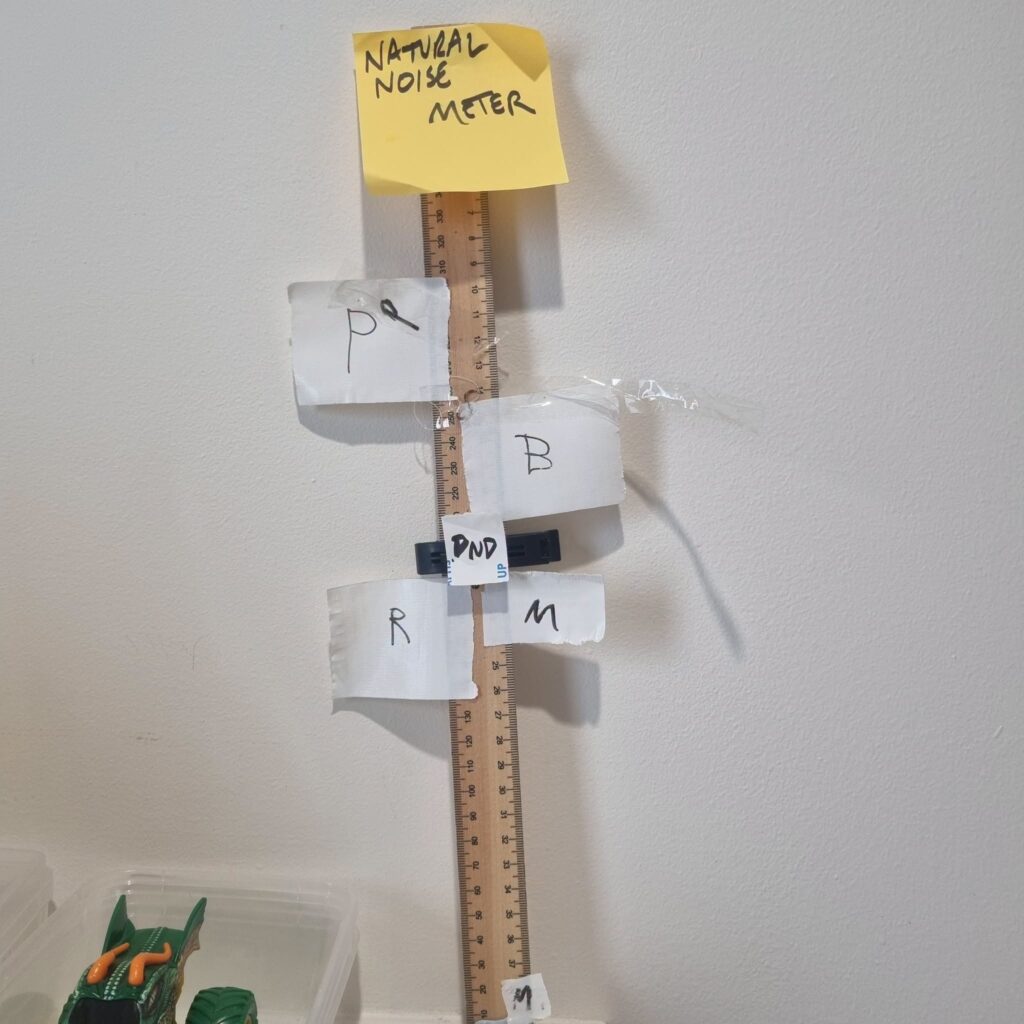
In a recent session, I noticed the group was having difficulty working together, so I decided to fashion a tool I named the Natural States of Noise meter (picture included)
The idea behind this tool was simple: we all have our own natural speaking volume, pitch and conversational rhythm. Some of us speak loudly, some quietly, some have higher-pitched voices, and some contribute less frequently to a conversation. None of these differences is automatically wrong. However, when we’re playing a group game, we need to find ways to accommodate one another so everyone has an opportunity to participate.
I used the meter to demonstrate that being too quiet can make it difficult to engage with the group, just as consistently talking over others can.
The goal isn’t to make everyone sound the same, but to help participants understand the impact of their communication while being less judgemental of differences they can’t necessarily control.
We also practised replacing hurtful comments like “shut up” with constructive requests such as “could you lower your volume?”
Once we’d explored this idea, I introduced a familiar, humorous character and used a playful roleplay training montage.
Each participant came up with their own annoying behaviours for the character, giving us a fun way to practise managing frustration, staying regulated and appreciating each other’s ideas.
It was a chance to explore these skills together without making any one participant the focus of the activity.
Finally, I invited each participant to choose a monster and create a short encounter for someone else to play through. This gave everyone an opportunity to take turns being the storyteller, setting challenges and responding to situations within a structured game.
What I particularly enjoy about this approach is that I’m not simply telling participants how they should behave. I’m creating opportunities for them to experience group dynamics, experiment with different responses and discover what helps a party work well together.
These sessions where held as part of Affirming Care Services Pty Ltd Socio-emotional language capacity groups at their clinic in Yarraville.