When people think about disability support workers, they often picture assistance with personal care, household tasks, transport or appointments.
When people think about disability support workers, they often picture assistance with personal care, household tasks, transport or appointments.
These can all be important parts of disability support. But support can also help someone get out into the community, explore their interests, develop hobbies and enjoy spending time with other people.
For adults with disability, having opportunities to do things they enjoy can make a real difference to everyday life.
Support should be about living, not just managing
Adults with disability have the same need for friendship, recreation, interests and enjoyable experiences as anyone else.
Someone might want to learn a new hobby, visit a local gaming group, attend a community event, go fishing, develop their cooking skills or simply have someone to share an activity with.
A disability support worker can provide assistance to make those opportunities accessible.
For some people, that might mean transport and practical assistance. For others, it might mean helping them feel comfortable in a new environment, understand an activity or participate in a group.
The support should reflect what the person wants to achieve.
Exploring hobbies and interests
Finding an enjoyable activity can be particularly important for someone who has become socially isolated or lost opportunities to participate because of disability.
A hobby can provide structure, enjoyment and something to look forward to.
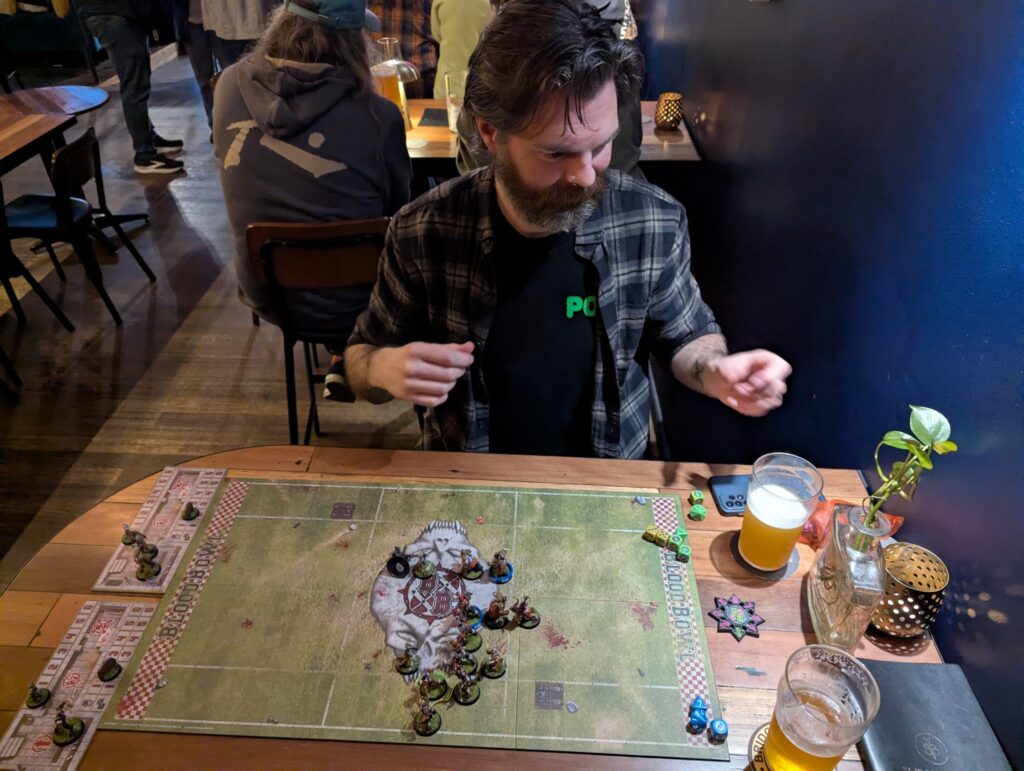
At Game Therapy, I use tabletop games as one way to create these opportunities.
Dungeons & Dragons can be adapted for people who enjoy storytelling, imagination and collaborative decision-making. The rules can be simplified, character choices reduced or expanded, and combat adjusted to suit the person’s abilities.
For people who enjoy strategy and science fiction, Star Wars: X-Wing can offer another experience. The game can be modified to reduce complexity, change the pace or make handling miniatures and components easier.
The aim isn’t to teach everyone to play the original game exactly as designed. It’s to create an enjoyable experience that the individual can participate in.
Support for people with psychosocial disability
People living with schizophrenia, BPD, PTSD, depression and other psychosocial disabilities may experience barriers to social participation.
Some may have lost contact with friends, stopped participating in previous hobbies or become disconnected from their community.
A support worker can assist someone to explore activities at a manageable pace, reconnect with existing interests or try something new.
This isn’t a substitute for mental health treatment or clinical support. It’s an opportunity to participate in everyday life, develop interests and spend time doing something meaningful.
Support for people with physical or cognitive disabilities
People with cerebral palsy, acquired brain injuries and other disabilities may also benefit from activities that are adapted to their individual needs.
This might involve changing the equipment, adjusting the pace, providing additional assistance or finding alternative ways to communicate and make decisions.
A person who has difficulty manipulating small game pieces might use larger components or receive assistance moving them. Someone who finds complex rules difficult to follow might use a simplified version of a game.
The important thing is to preserve the person’s choices and involvement wherever possible.
NDIS funding and relevant support items
NDIS funding may include support to assist an adult to access community activities, develop skills and participate socially.
Relevant support categories and items may include:
Core – Assistance with Social, Economic and Community Participation (Category 04)
04_104_0125_6_1– Access Community Social and Recreational Activities, Weekday Daytime.04_103_0125_6_1– Access Community Social and Recreational Activities, Weekday Evening.04_105_0125_6_1– Access Community Social and Recreational Activities, Saturday.04_106_0125_6_1– Access Community Social and Recreational Activities, Sunday.
Group-based participation – Category 04
04_102_0136_6_1– Group Activities, Weekday Daytime.04_103_0136_6_1– Group Activities, Weekday Evening.04_104_0136_6_1– Group Activities, Saturday.04_105_0136_6_1– Group Activities, Sunday.
Capacity Building – Increased Social and Community Participation (Category 09)
09_009_0117_6_3– Skills Development and Training.
Capacity Building – Improved Relationships (Category 11)
11_024_0117_7_3– Individual Social Skills Development.
The Capacity Building items are not general-purpose recreational support codes. They have specific requirements concerning the service delivered and worker qualifications or level.
The appropriate item depends on the participant’s plan and the actual support being provided. Funding for a support worker also does not automatically cover the cost of games, activities, equipment or entry fees.
Finding the right support worker
A good support worker should take an interest in the person, not just the tasks they need help completing.
They should be willing to listen, understand what the participant enjoys and look for opportunities to make participation possible.
At Game Therapy, my approach is informed by recreational therapy and more than a decade of experience in disability and recreation settings.
I believe disability support should include opportunities for people to enjoy their lives, develop interests and connect with others.
Sometimes the most valuable part of a support session isn’t what someone learns. It’s having a good time doing something they love.