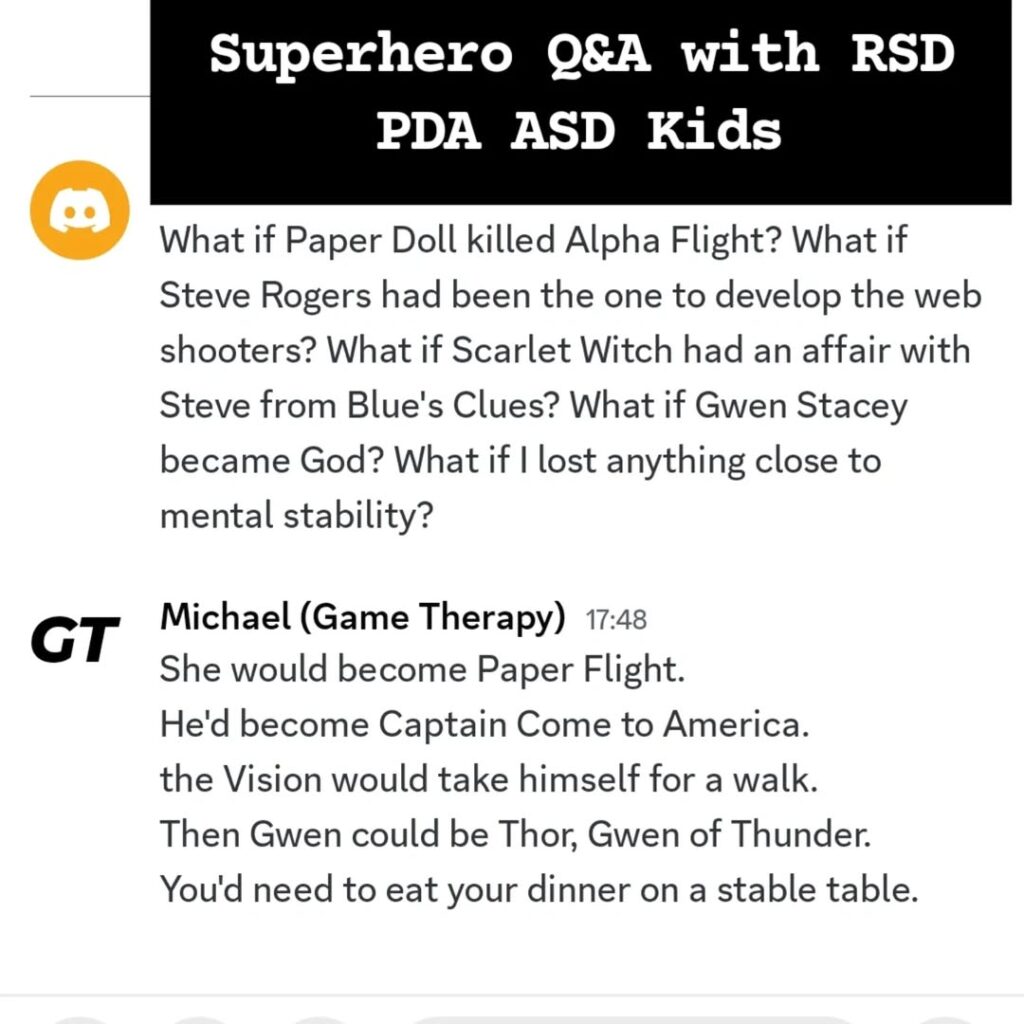
These children may react strongly to perceived criticism or mistakes, so gentle humour can reduce tension and make difficult moments feel safer.
When used kindly, humour shows that errors are normal and not something to fear. It helps shift the focus from failure to shared connection.
A playful comment or small joke can also interrupt escalating emotions and help the child regulate.
Importantly, humour must never be directed at the child.
Instead, it should be inclusive, warm, and supportive, reinforcing trust and helping the child feel accepted even when things go wrong.
Kind hearted humour builds trust.